Why Wasting the Yolk is Wasting Your Protein: A Friendly Guide
One medium Pakistani egg contains Approximately 5.5 to 6 grams of complete protein. About 3.5 grams are found in the egg white, while the remaining 2.5 grams sit perfectly inside the yolk. Eating the whole egg is the most effective way to absorb these nutrients.
I see it happen all the time in kitchens and gyms across Lahore. Someone cracks open a beautiful fresh egg, carefully separates the white, and washes that rich golden yolk straight down the sink. As a nutritionist, it always breaks my heart just a little bit.
We are all trying to eat healthier, build strength, and feed our families well. But there is so much confusing advice out there about where the actual nutrition is hiding. Let us clear the air and look at exactly how much protein is really inside one egg.
Young people working out and mothers trying to feed growing children are constantly confused by mixed advice. Local gym trainers tell them to eat six egg whites only, while grandmothers insist on eating the whole egg. Consumers feel frustrated because they just want a straight answer. They are tired of feeling like they are doing it wrong or wasting good food.
The Big Secret: Exactly How Much Protein is Inside One Egg?
Many local fitness pages copy their data from foreign websites that talk about giant commercial eggs. In Pakistan, our egg sizes vary quite a bit based on where you buy them.
Breaking Down the Numbers: Grams of Protein in One Egg
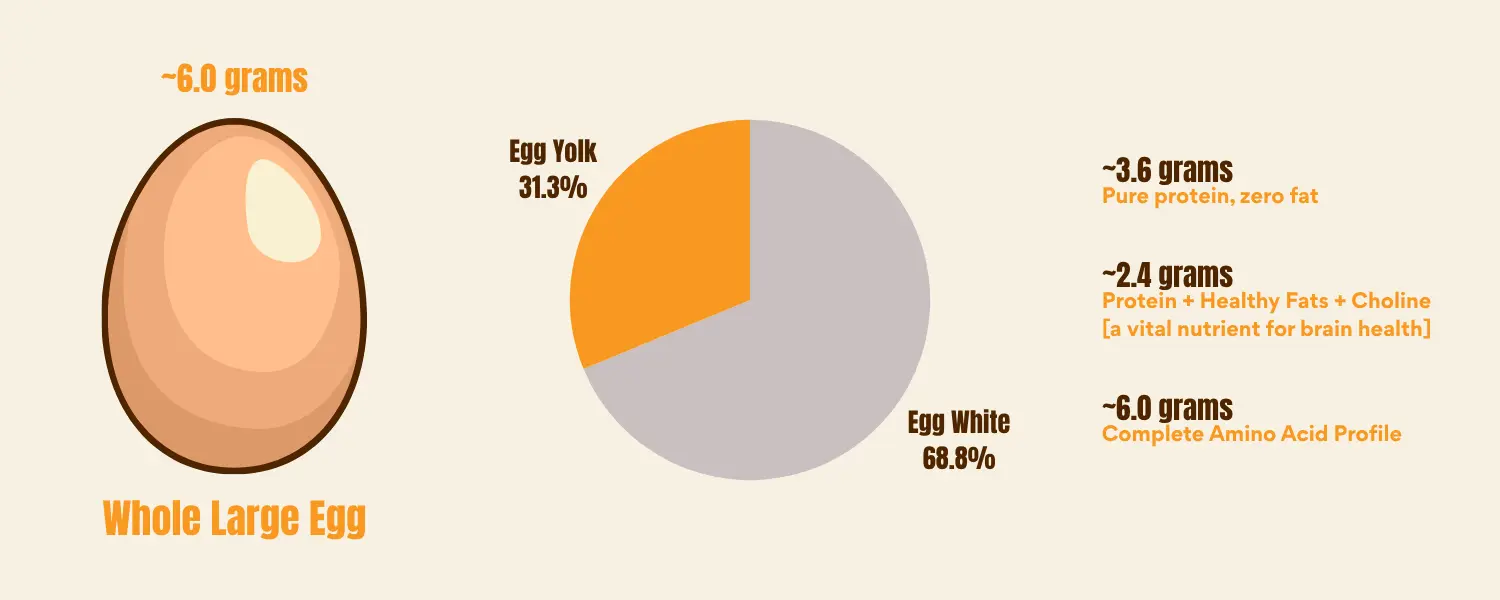
To understand what you are actually eating, let us look at how the protein is divided inside a normal large egg. It is not as simple as just looking at the white part.
| Egg Component | Average Protein Content | Major Nutrient Benefit |
|---|---|---|
| Egg White (Albumen) | ~3.6 grams | Pure protein, zero fat |
| Egg Yolk | ~2.4 grams | Protein + Healthy Fats + Choline [a vital nutrient for brain health] |
| Whole Large Egg | ~6.0 grams | Complete Amino Acid Profile |
Why "Ande Mein Kitna Protein Hota Hai" Depends on the Size
You cannot always trust standard internet calculators. A small backyard egg has a different weight than a large farm egg, which changes the final protein value.
Core Health Truth: A standard medium-sized egg in Pakistan gives you roughly 5.5 to 6 grams of complete protein, meaning you cannot rely on gym rumors that claim every single egg automatically gives you 8 or 10 grams.
The Hidden 40%: Why the Yolk is a Muscle Building Powerhouse
The common gym rumor is that the yolk is just empty fat that clogs your arteries. This is old and outdated advice that ignores modern science. When you throw away the yellow center, you are losing almost half of the food value you just paid for.
Why Throwing Away the Yolk Means Losing Good Protein
The yolk is actually a fantastic source of muscle growth. Modern research shows it triggers muscle protein synthesis [the bodily process of repairing and building new muscle fibers] much better than egg whites alone.
- Wasted Nutrients: Discarding the yolk means you throw away 40% of the egg's total protein.
- Muscle Growth Helpers: The yolk contains leucine, an essential amino acid [the tiny building blocks that join together to make a complete protein] that hits the threshold needed to trigger muscle repair.
- Feeling Full: Satiety hormones [chemical signals in your stomach that tell your brain you are full] are activated by the healthy fats in the yolk, which prevents midday sugar cravings.
The Perfect Match: How the Yolk Helps Your Body Absorb the White
Nature did not create the egg white to be eaten all by itself. The vitamins that help your body process protein need healthy fats to enter your bloodstream. Those exact fats are stored right inside the yolk.
Core Health Truth: Mother Nature packaged the egg as a whole food. The yolk contains the exact fat-soluble vitamins, like Vitamin D and Selenium [a mineral that protects your cells], needed to maximize your body’s bioavailability (how easily and quickly your body can actually absorb and use the nutrients you eat) of the protein in the white.
To understand how the human body processes complete proteins, you can review the clinical data on protein absorption rates published directly by the National Institutes of Health on PubMed.
Complete Proteins Explained: Eggs vs. Chicken and Plant Proteins
Not all proteins are created equal. Protein from lentils, wheat, or beans is highly nutritious, but it is incomplete on its own.
Understanding Amino Acids Without the Boring Medical Jargon
Your body needs nine specific building blocks from food because it cannot make them on its own. If even one building block is missing, your body cannot repair muscle tissue efficiently.
The Gold Standard of Protein Digestibility
Eggs are considered one of the highest-quality complete protein sources because they contain all essential amino acids in highly digestible forms. Nutritionists often use a tool called PDCAAS [a scientific score that measures protein quality based on human digestion] to rank foods. In this system, eggs score a perfect rating.
| Protein Source | Digestibility & Quality | Best Time to Eat |
|---|---|---|
| Whole Eggs | Perfect complete protein, absorbs steadily | Breakfast or after a workout |
| Chicken Breast | Excellent complete protein, very lean | Lunch or dinner meals |
| Lentils (Daal) | Incomplete on its own, high in fiber | Combine with rice or roti to complete |
| Whey Powder | Extremely fast absorption | Immediately after heavy gym lifting |
Adding a whole egg to a traditional Pakistani wheat-based diet completes the protein chain that roti lacks. For a full chemical breakdown of how egg sizes impact nutrient yields, refer to the verified food composition tables managed by the United States Department of Agriculture on USDA FoodData Central.
Are Egg Yolks Actually Bad for Your Cholesterol?
This is the biggest fear people have when eating eggs. For decades, we were told that dietary fat instantly caused heart problems.
Modern Science on Dietary Fat and Heart Health
According to current nutrition research, cholesterol in the food you eat does not automatically raise the bad cholesterol in your blood. Modern dietary guidelines now recognize that the liver balances cholesterol production based on what you consume.
Core Health Truth: For most healthy individuals, eating whole eggs improves HDL [the "good" cholesterol that protects your heart] without dangerously spiking LDL [the "bad" cholesterol].
Of course, if you have a specific heart condition or diabetes, we always recommend speaking to your doctor first. But for the vast majority of people, whole eggs are a safe and powerful superfood.
Boiled, Fried, or Raw: Which Cooking Method Gives You the Most Protein?
How you prepare your eggs changes how much nutrition your body can actually extract from them. Cooking is not just about taste. It is about safety and chemistry.
Gym Ke Liye Best Egg: The Danger of the Raw Egg Trend
Some people still think drinking raw eggs makes them look tough or builds muscle faster. This is actually backward and can make you very sick.
The Best Way to Keep Your Protein Safe
Cooking heat changes the structure of the egg white. This makes it much easier for your stomach enzymes to break it down.
| Cooking Method | Protein Digestion Rate | Safety & Bacterial Risk |
|---|---|---|
| Raw Egg | ~50% absorbed | High risk of Salmonella [harmful stomach bacteria that cause severe food poisoning] |
| Soft/Hard Boiled | ~91% absorbed | Completely Safe (Bacteria destroyed by heat) |
| Over-Fried (Burnt) | ~80% absorbed | Low risk, but high heat damages some amino acids |
How Many Eggs Should You Eat Every Day?
The answer depends on your age, activity level, and overall diet. A young athlete in Lahore sweating through heavy gym sessions needs far more protein than an office worker.
- For General Health: Most healthy adults can safely enjoy 1 to 2 whole eggs a day to support basic health and energy.
- For Muscle Building: Gym goers often eat 3 to 4 whole eggs daily, sometimes mixing in a few extra whites to increase protein without adding too much fat.
- For Growing Children: One whole egg a day provides essential Vitamin B12 and brain-building nutrients that kids desperately need for proper development.
If you want the nutritional benefits of whole eggs without worrying about poor-quality feed or artificial additives, choosing ethically raised free-range eggs becomes important. This is why choosing naturally sourced Egg Sheg Free-Range Desi Eggs ensures your family gets pure, clean protein from birds raised on healthy pastures. You can learn more about healthy meal planning by browsing our complete nutrition guides in the Egg Sheg Health Blog Section.
Consumer Support FAQs
If I boil my eggs for too long and the yolk turns green, does it destroy the protein?
No, a green ring around the yolk does not destroy the protein. It is just a harmless chemical reaction between the sulfur in the white and the iron in the yolk, which happens when eggs are cooked for too long or at a very high heat. The protein content stays exactly the same, though the texture might become a bit rubbery.
My gym trainer told me to drink raw egg whites for faster protein absorption. Is this true?
Actually, it is a myth. Science shows that your body only digests about 50% of a raw egg's protein, whereas it absorbs over 90% of a cooked egg's protein. Plus, drinking raw eggs puts you at a high risk for Salmonella [stomach-flu-causing bacteria]. Cooking the egg safely locks in the nutrients and protects your stomach.
When is the best time to eat eggs for muscle recovery?
The best time to eat eggs is within two hours after your workout or as your first meal of the day. Eggs absorb at a steady, moderate pace compared to fast-acting whey protein powder. This steady digestion provides your muscles with a continuous supply of amino acids throughout the day.
Do traditional "Desi Eggs" provide more protein per gram compared to white commercial farm eggs?
Gram for gram, a white farm egg and a backyard desi egg contain the exact same amount of protein. However, authentic free-range desi eggs typically offer significantly higher levels of Vitamin D, Vitamin A, and Omega-3 fatty acids. The hens roam freely outside and eat a natural diet, and these extra vitamins are what help your body absorb the protein better.
Can I get my daily protein requirement just from eating egg whites if I have high cholesterol?
While you can get pure protein from egg whites, you miss out on the vital micronutrients in the yolk that actually aid overall health. Modern research shows that for the vast majority of people, dietary cholesterol from whole eggs does not significantly raise bad blood cholesterol levels. If you have a specific medical condition, we always recommend speaking to your doctor, but for most healthy adults, eating the whole egg is far better for protein use.
The Bottom Line on Egg Protein
The science is clear. Whole eggs are one of the most accessible, affordable, and complete protein sources available in Pakistan today. Stop pouring the golden yolk down the sink. By eating the whole egg, you are giving your body the exact tools it needs to absorb nutrients, build muscle, and stay healthy for the long term.